
Select this text to see the highlight effect
Designing the Safety Net
Designing Better Support for Study Abroad Students

Service Design

Designing the Safety Net
Designing Better Support for Study Abroad Students

Service Design

User Demographics
User Demographics
User Demographics

Setting The Scene

Project Overview

A service design project for the Office of Education Abroad (OEA), focused on reducing last-minute student withdrawals and strengthening engagement from the moment a student discovers a program to the day they fly out.

A service design project for the Office of Education Abroad (OEA), focused on reducing last-minute student withdrawals and strengthening engagement from the moment a student discovers a program to the day they fly out.

A service design project for the Office of Education Abroad (OEA), focused on reducing last-minute student withdrawals and strengthening engagement from the moment a student discovers a program to the day they fly out.

Designing a clearer, calmer, and more confidence-building study abroad journey at Pratt.


Designing a clearer, calmer, and more confidence-building study abroad journey at Pratt.

Designing a clearer, calmer, and more confidence-building study abroad journey at Pratt.

Made For

Pratt Institute- Office of Education Abroad

Team

3 Service Designers

My Responsibilities

Research Planning, Usability Testing,

UX Strategy & UX Design

Timeline

2.5 Months

A sneak-peak into the final solution

The Starting Point: A Pattern Hidden in Plain Sight

The Challenge
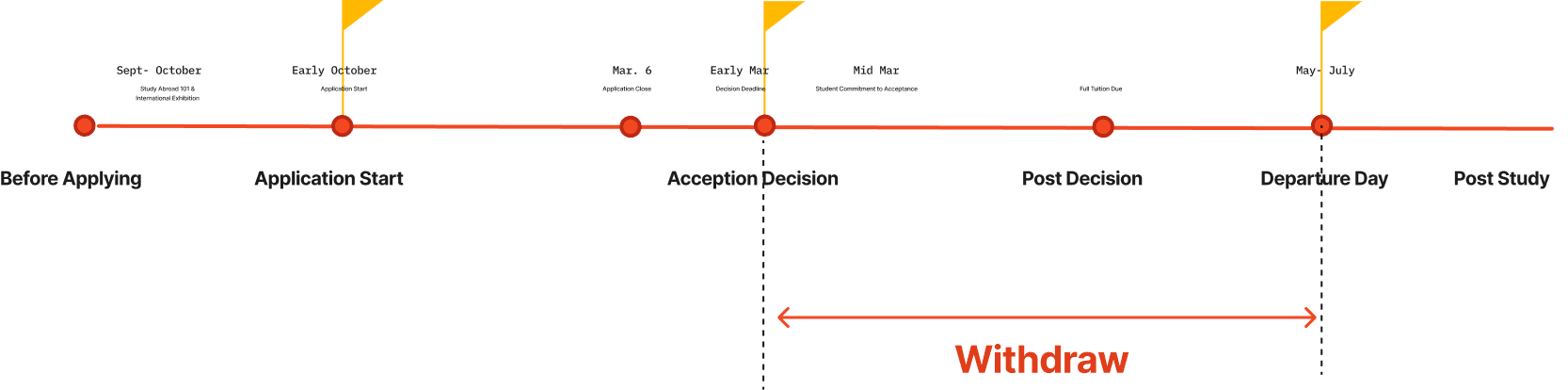
Every Fall, the OEA team watched the same story unfold. Students would get excited about studying abroad… and then slowly disappear from the process. Some withdrew early. Others waited until the very last minute — sometimes days before departure.

When we partnered with OEA, they were clear about their biggest question:

Every Fall, the OEA team watched the same story unfold. Students would get excited about studying abroad… and then slowly disappear from the process. Some withdrew early. Others waited until the very last minute — sometimes days before departure.

When we partnered with OEA, they were clear about their biggest question:

Every Fall, the OEA team watched the same story unfold. Students would get excited about studying abroad… and then slowly disappear from the process. Some withdrew early. Others waited until the very last minute — sometimes days before departure.

When we partnered with OEA, they were clear about their biggest question:

 “Why are students dropping out… and how can we stop it?”

 “Why are students dropping out… and how can we stop it?”

 “Why are students dropping out… and how can we stop it?”

Core Questions

How Did We Solve This?

The Goal
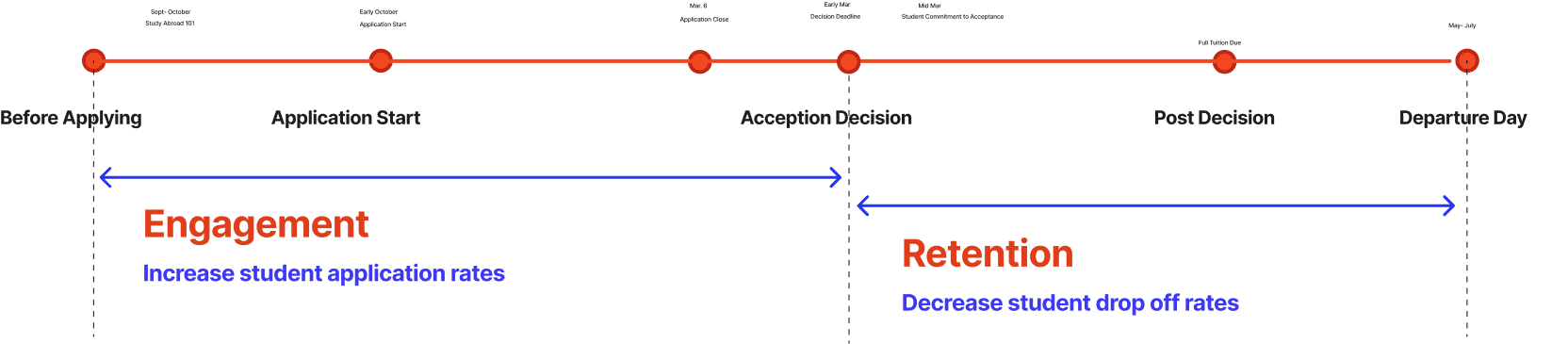
Investigate the causes of student withdrawals in outbound study abroad programs and co-design interventions that improve engagement and retention.

Investigate the causes of student withdrawals in outbound study abroad programs and co-design interventions that improve engagement and retention.

Investigate the causes of student withdrawals in outbound study abroad programs and co-design interventions that improve engagement and retention.

Goal

To understand this, we stepped far beyond a typical UX workflow. This meant mapping the entire ecosystem, listening to returning travelers, and even recreating the emotional journey students go through when deciding whether to leave home for a month.

To understand this, we stepped far beyond a typical UX workflow. This meant mapping the entire ecosystem, listening to returning travelers, and even recreating the emotional journey students go through when deciding whether to leave home for a month.

To understand this, we stepped far beyond a typical UX workflow. This meant mapping the entire ecosystem, listening to returning travelers, and even recreating the emotional journey students go through when deciding whether to leave home for a month.

Getting in Tune with Our Users

The Methodology

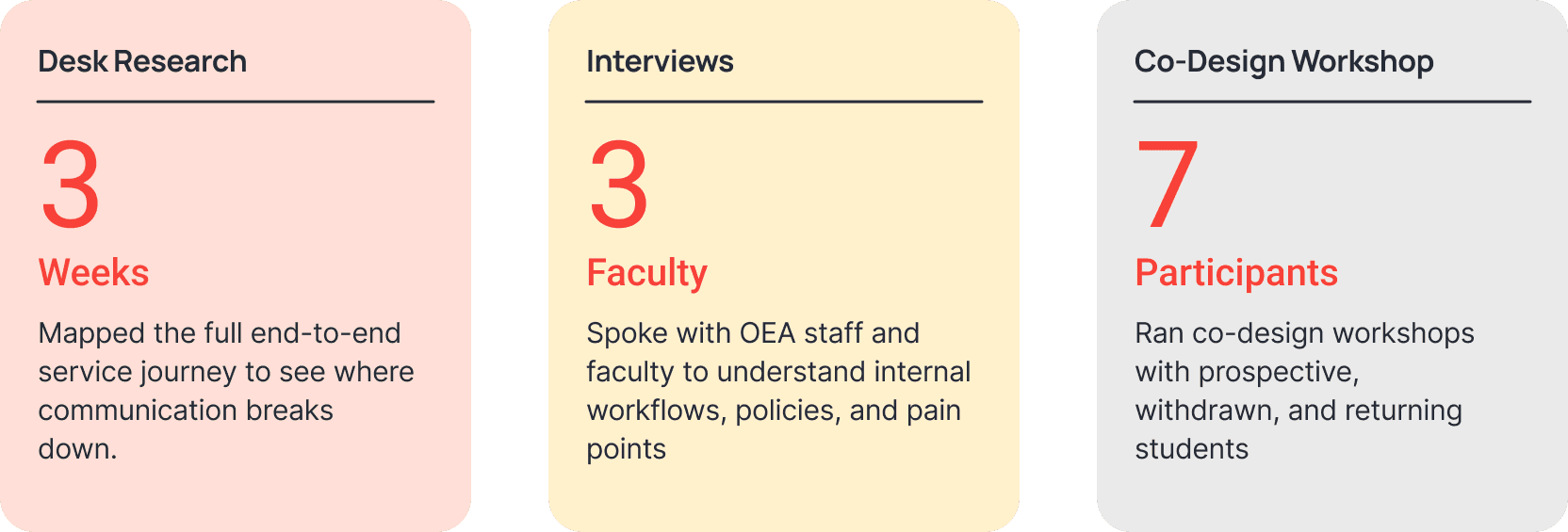
To understand the drivers of student withdrawals, we studied the service from both the student and system perspectives.
User Demographics
User Demographics
User Demographics

Methodlogy

Mapping the Ecosystem

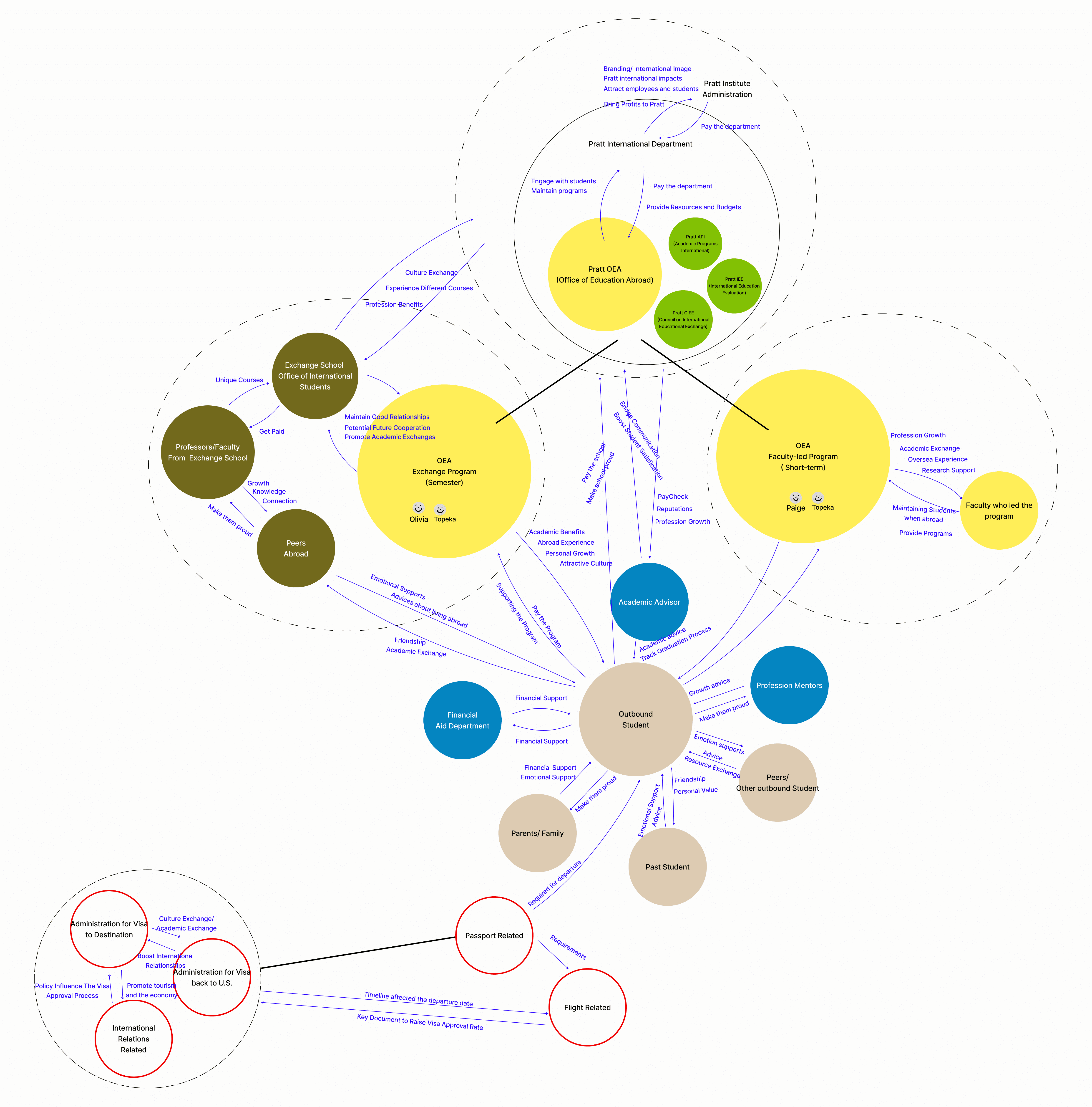
We mapped OEA, Faculty, Finance, Advisors, Partner Institutions, every moving part of this service. Seeing them all on one page made one thing clear: The service is held together by many people… but students only see the cracks.

User Demographics
User Demographics
User Demographics
User Demographics
User Demographics
User Demographics

Methodlogy

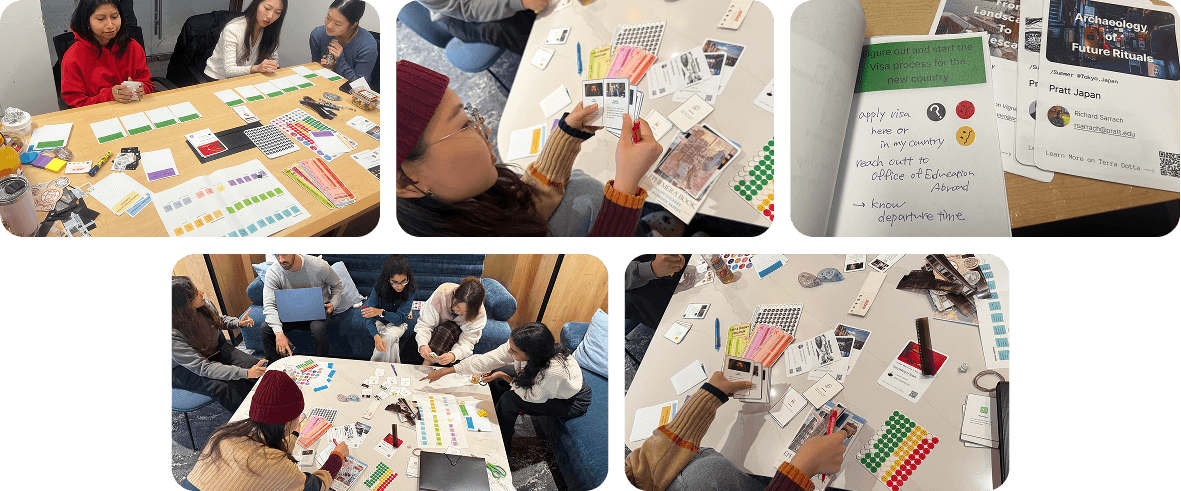
Co-Design Workshops

We didn’t ask students abstract questions. Instead, we had them recreate their study abroad journey the way they’d write it in a personal journal.
User Demographics
User Demographics
User Demographics

Methodlogy

Designing With Students, Not Just For Them

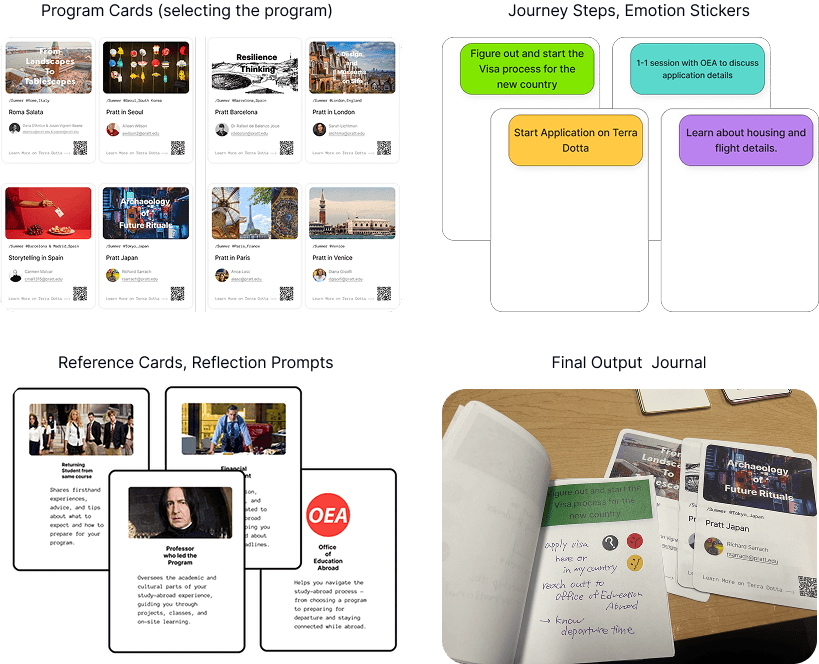
Students rebuilt their entire journey using program cards, emotion stickers, prompts, and journaling sheets.
You can literally see them laying out their emotions, steps, and moments of doubt.

Watching them do this was eye-opening. Deadlines they ignored weren’t about laziness. Visa confusion wasn’t about irresponsibility. The system itself shaped their struggles.


User Demographics
User Demographics
User Demographics

What We Found: Four Forces Quietly Pushing Students Away

Insights

Core Driver 1
Limited access to clear, detailed program information during the early exploration stage makes it difficult for students to compare options and sustain motivation to apply.

User Quotes

Core Driver 2
Lack of familiarity with daily life abroad and insufficient emotional support leads many students to feel uncertain about traveling alone, making them more likely to opt for a safer, more predictable summer at home.

User Quotes

Core Driver 3
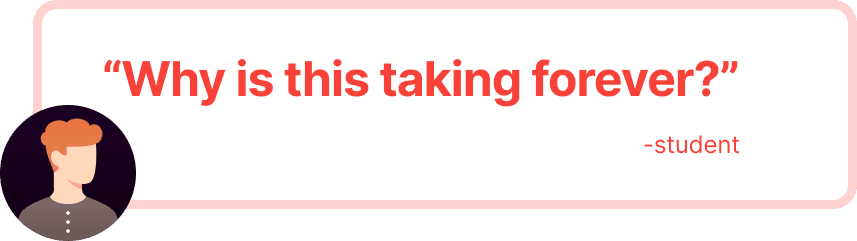
Extended application timelines and fragmented, repetitive procedures cause students to become desensitized to deadlines and overwhelmed by the number of tasks, eventually resulting in withdrawal due to fatigue or confusion.
User Quotes

Core Driver 4
External environmental factors—such as visa challenges, geopolitical shifts, international uncertainties, and parental concerns— can trigger last-minute anxiety and lead students to drop out of programs despite initial interest.

User Quotes

How Might We Solve This?

Strategies

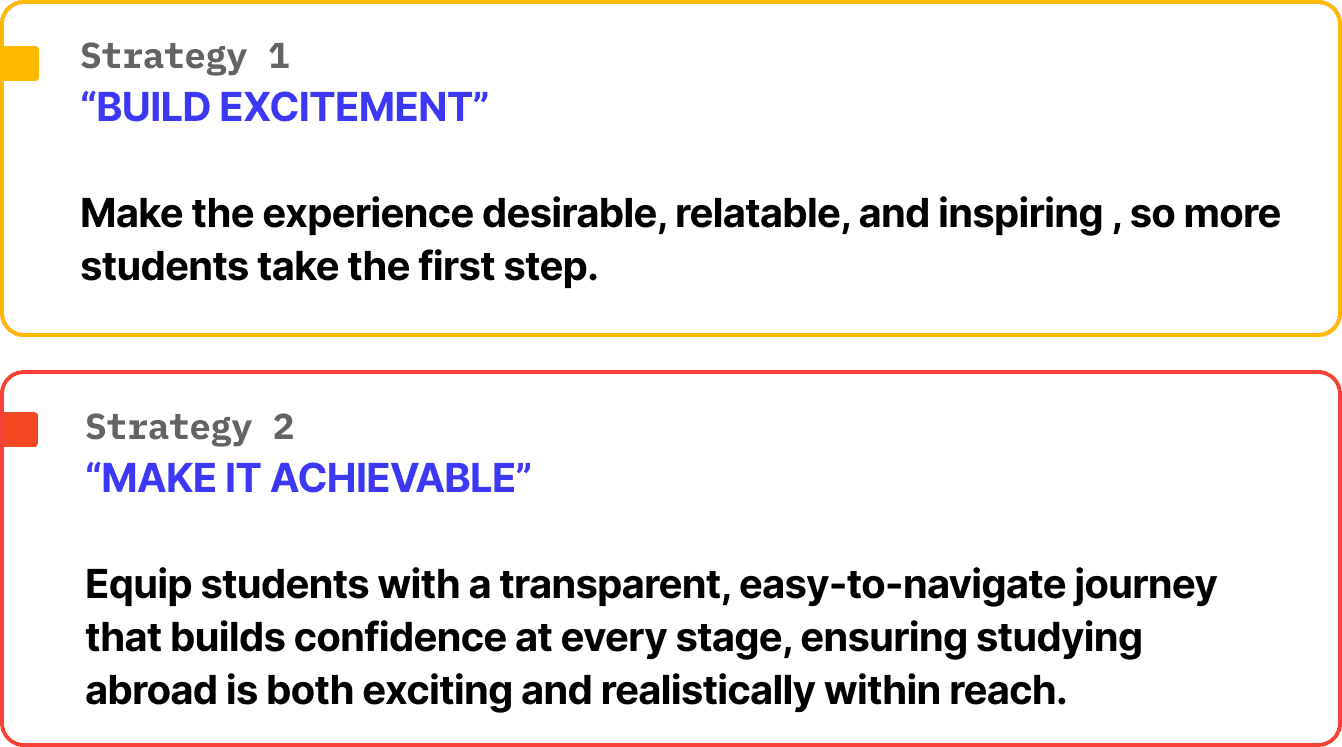
We anchored on two guiding strategies
User Demographics
User Demographics
User Demographics
Intervention 1: Make the Experience Feel Real, Not Abstract

The Solution

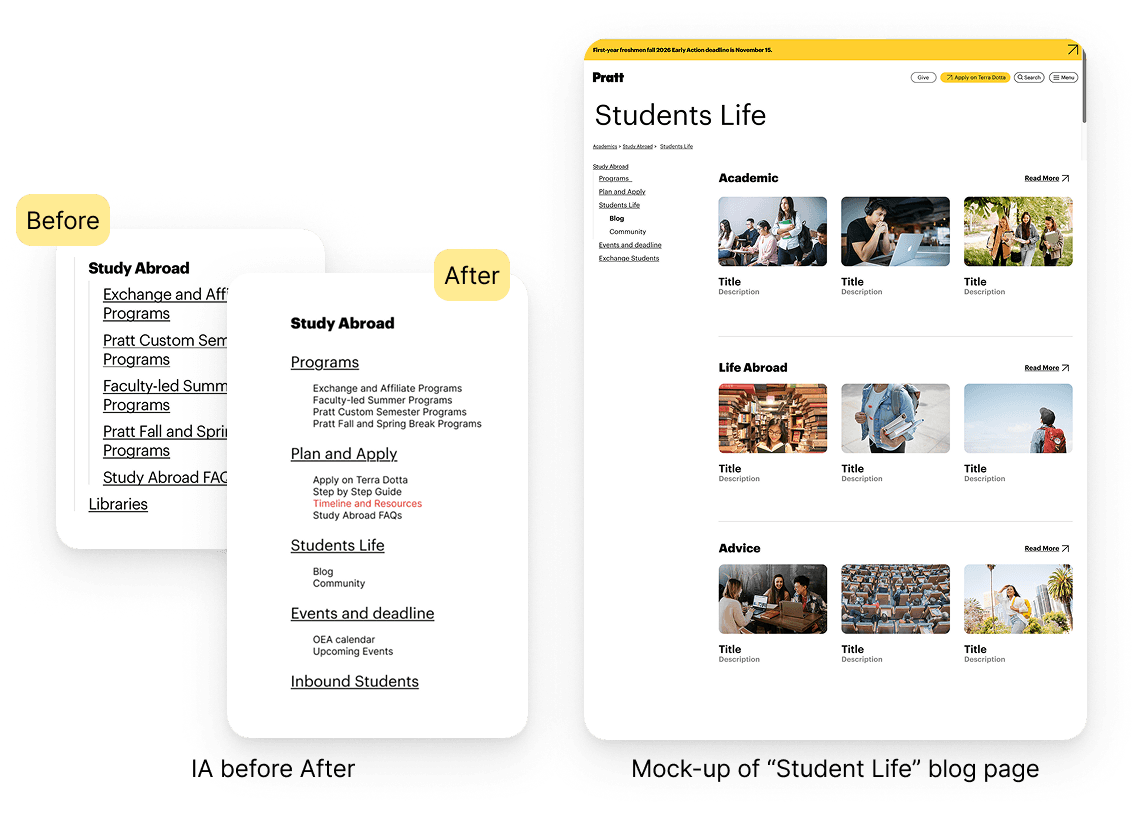
Students weren’t dropping out because they lacked interest. They dropped out because they couldn’t imagine the experience well enough to stay committed.

So we redesigned the early touchpoints to feel more compelling and human:
User Demographics
User Demographics
User Demographics

Core Question

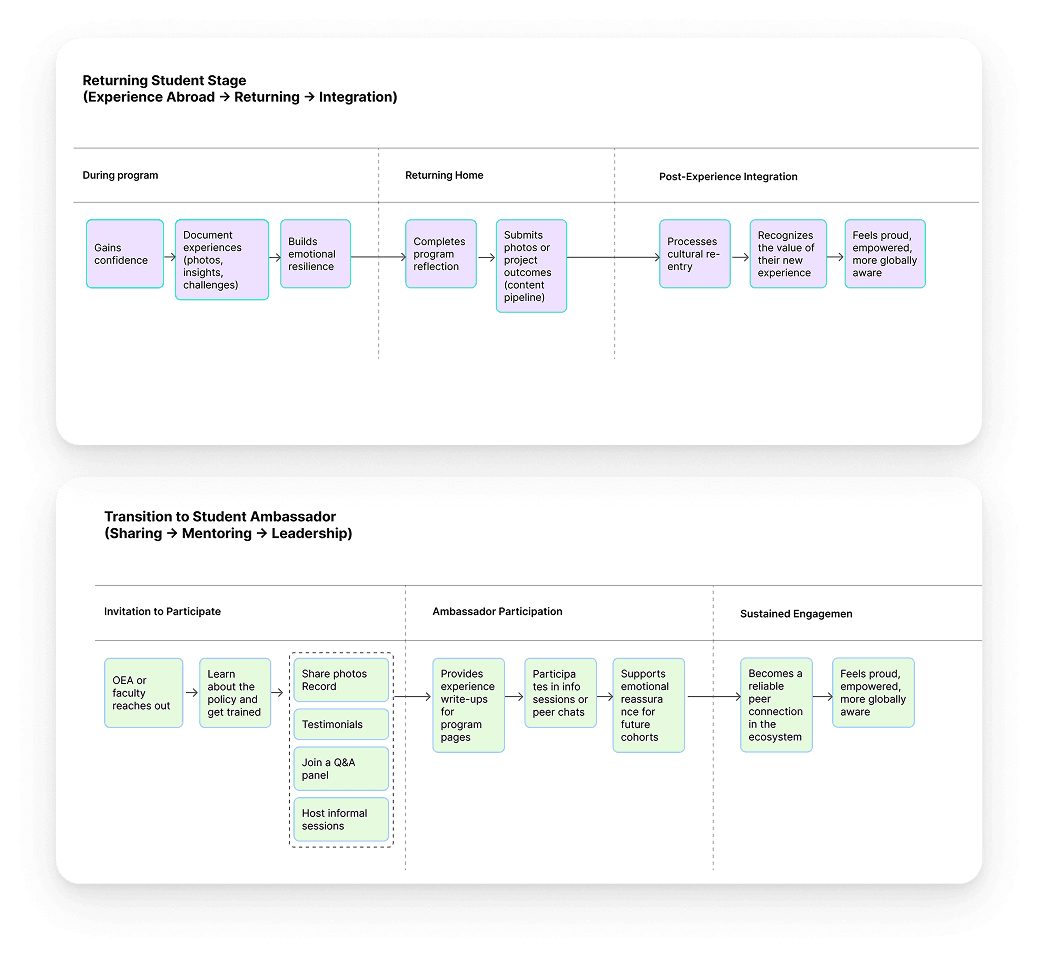
Intervention 2: Bring Back the Voices Students Trust Most

The Solution

When unsure, students turned to the only people they considered “safe experts”:
those who had already gone.
User Demographics
User Demographics
User Demographics

Core Question

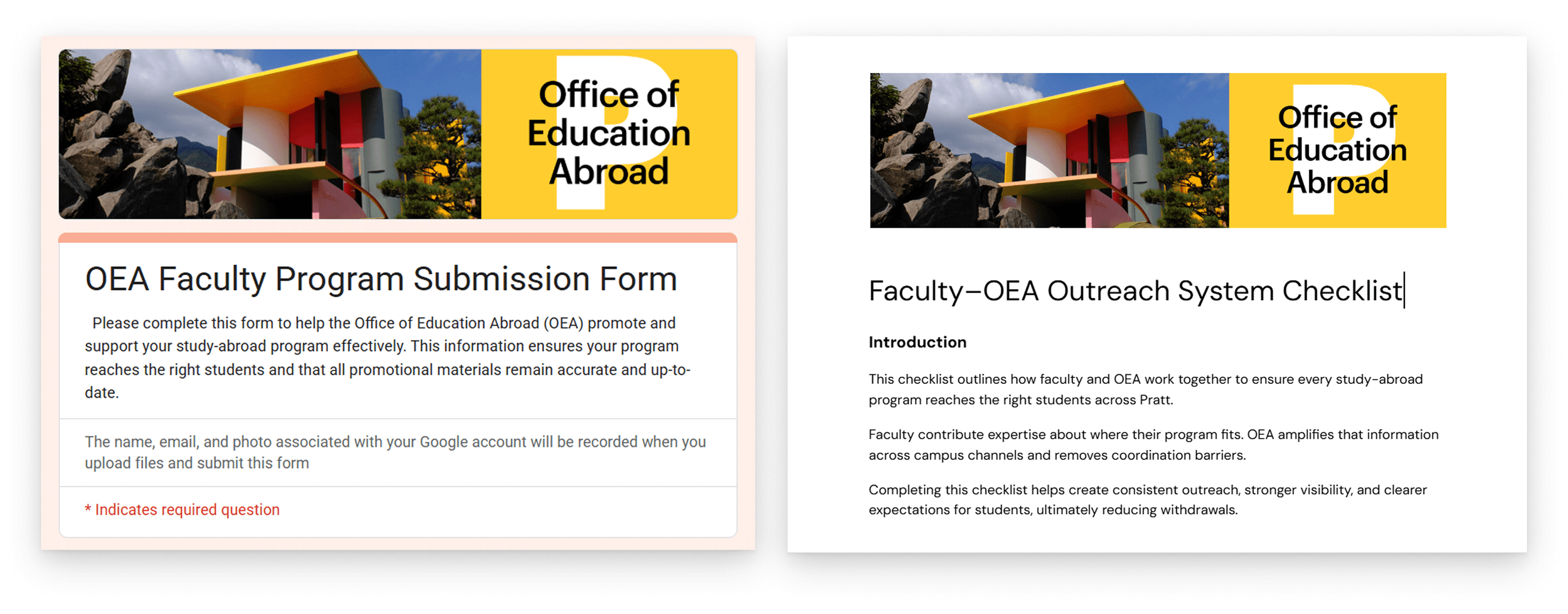
Intervention 3: Align Faculty → OEA → Students

The Solution

The system relied on faculty sending their program information… except every faculty member did this differently.
User Demographics
User Demographics
User Demographics

Core Question

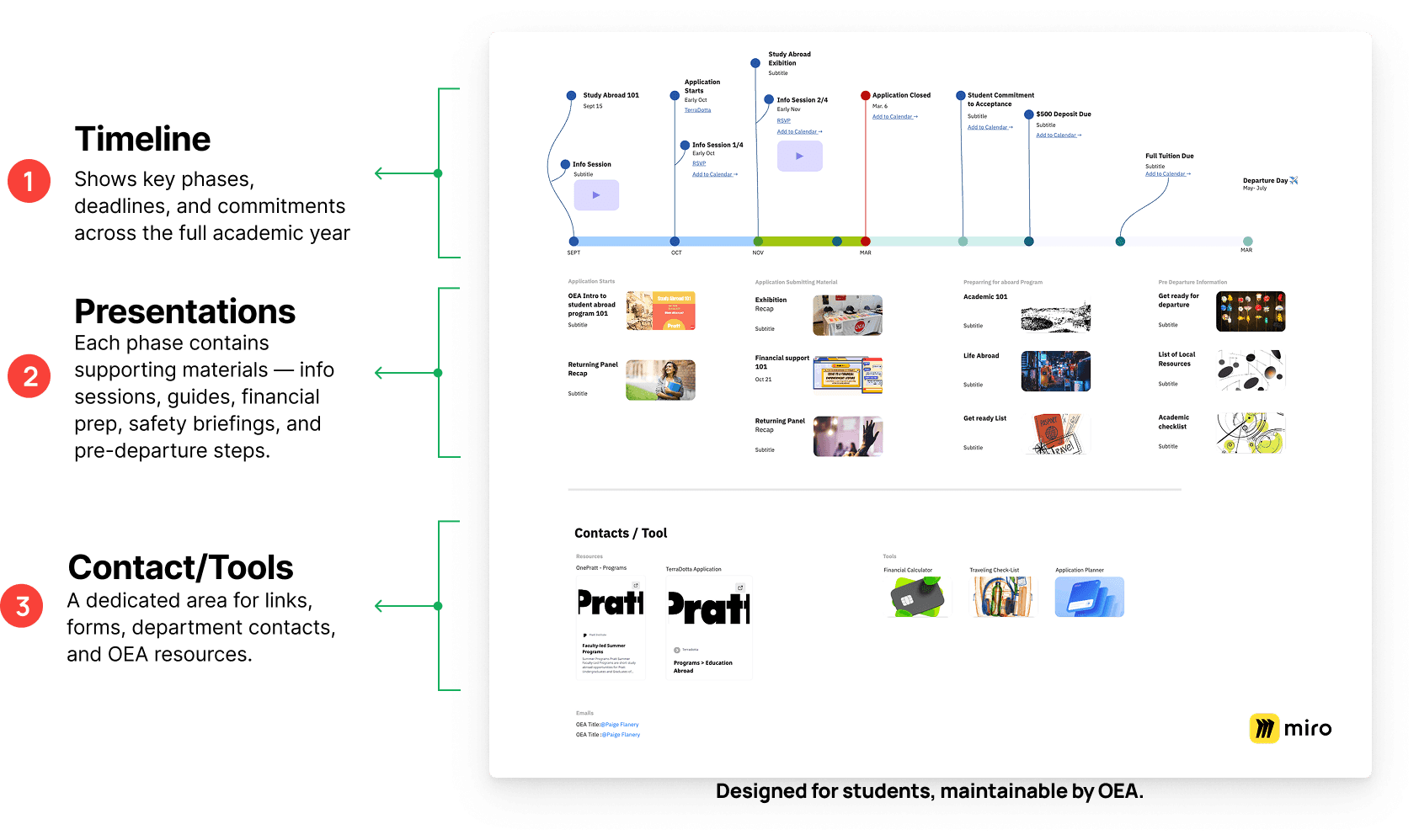
Intervention 4: One Timeline to Replace a Thousand Questions

The Solution

The system relied on faculty sending their program information… except every faculty member did this differently.
User Demographics
User Demographics
User Demographics

Core Question

The System Comes Together

The Conclusion
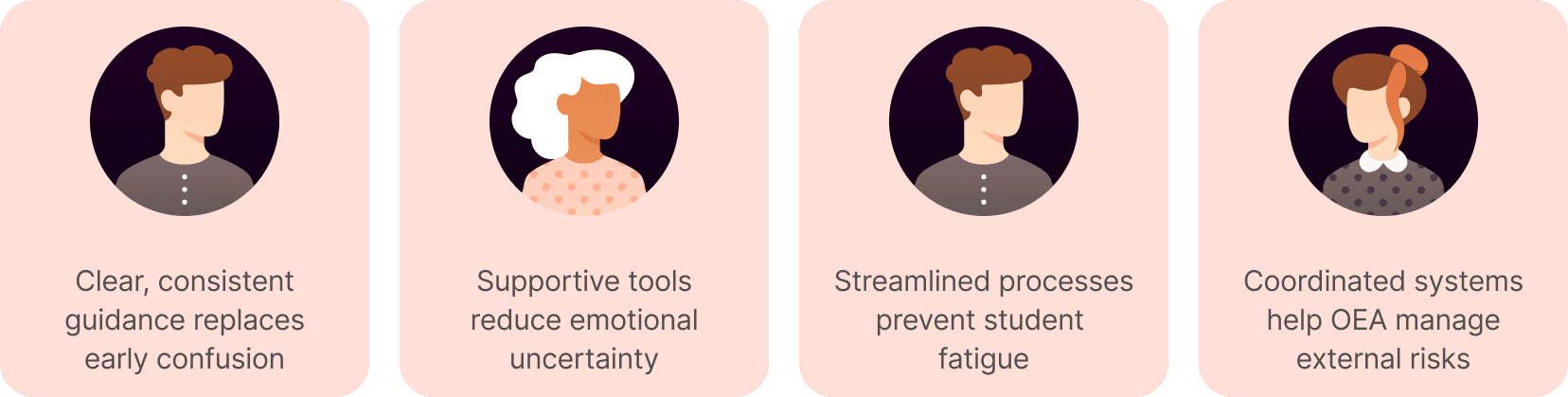
Each intervention strengthens a different weak point, but together they create a more resilient ecosystem:

Each intervention strengthens a different weak point, but together they create a more resilient ecosystem:

Each intervention strengthens a different weak point, but together they create a more resilient ecosystem:

When students feel informed and supported, they stay.

When students feel informed and supported, they stay.

When students feel informed and supported, they stay.

When it Landed

The Final Review

User Demographics
User Demographics
User Demographics

Final Client Presentation

In the final presentation, we walked the OEA team through the study-abroad journey as one connected system from early curiosity to departure.


And the highlight?
The team shared that the work felt practical, realistic, and immediately actionable.
Instead of debating if the ideas would work, the conversation shifted to how and when they could start piloting them.

That was the moment the project stopped being a proposal and started feeling like a roadmap.

In the final presentation, we walked the OEA team through the study-abroad journey as one connected system from early curiosity to departure.


And the highlight?
The team shared that the work felt practical, realistic, and immediately actionable.
Instead of debating if the ideas would work, the conversation shifted to how and when they could start piloting them.

That was the moment the project stopped being a proposal and started feeling like a roadmap.

In the final presentation, we walked the OEA team through the study-abroad journey as one connected system from early curiosity to departure.


And the highlight?
The team shared that the work felt practical, realistic, and immediately actionable.
Instead of debating if the ideas would work, the conversation shifted to how and when they could start piloting them.

That was the moment the project stopped being a proposal and started feeling like a roadmap.